Emphasizing that the blue economy is a foundational national necessity rather than a mere rhetorical slogan, Minister of Fisheries, Agriculture and Marine Resources Ahmed Shiyam underscored that the ocean is the very lifeblood of the Maldives, where over ninety-nine percent of the national territory consists of the sea.
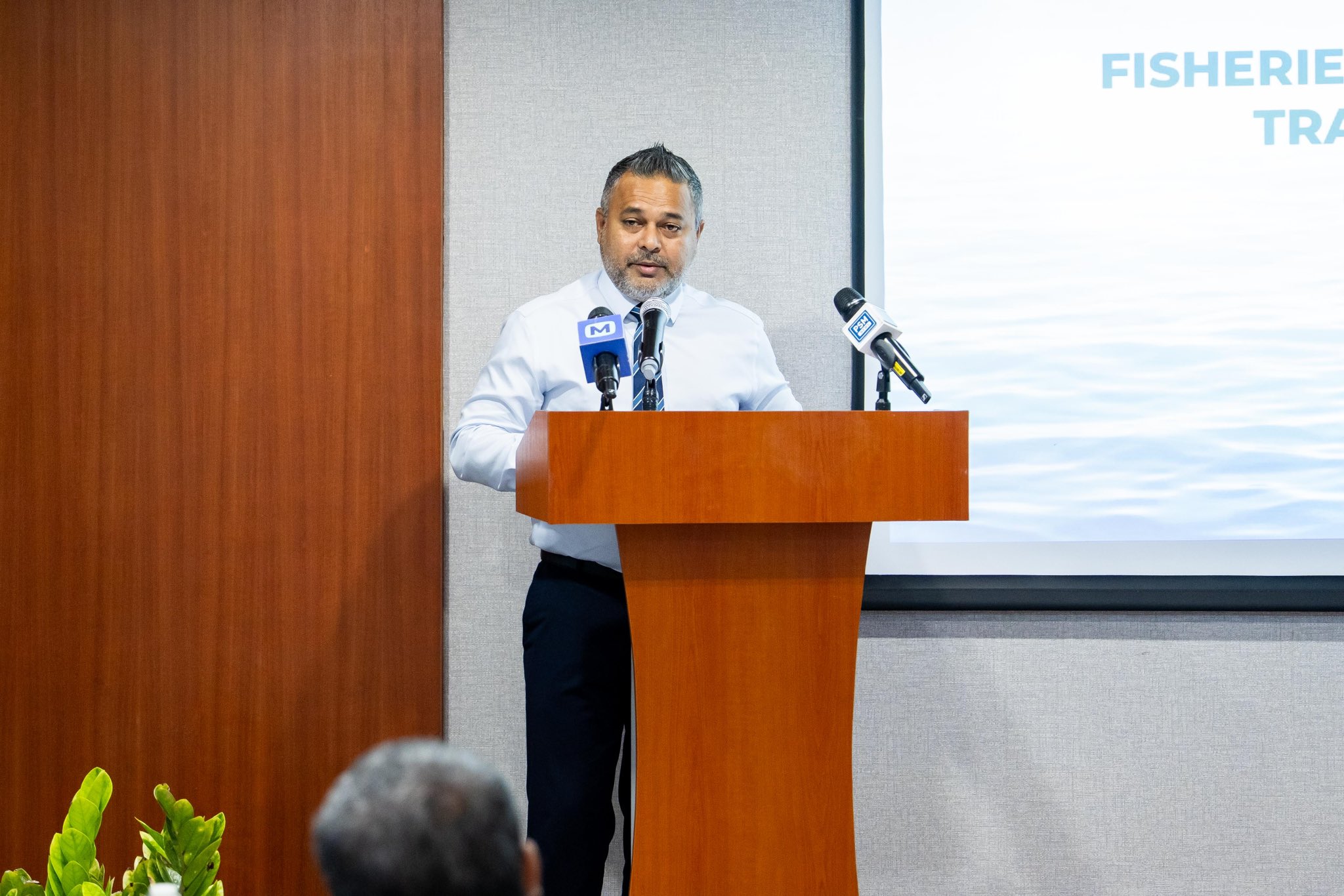
Speaking at the inauguration of a joint technical training program held in collaboration with China's Hainan University, Minister Shiyam highlighted the profound economic and cultural ties the Maldivian people share with the ocean, noting that marine resources and coral reefs sustain local communities, livelihoods, and the vital tourism sector.
Stressing that this economic reliance demands absolute environmental stewardship, the Minister made his stance clear with a defining statement:
"That is why the blue economy is not a slogan for us. It is a national necessity. Our challenge is to grow the value of what the ocean gives us while protecting the ocean itself. We cannot do one without the other."
Reflecting on the broader diplomatic landscape, the Minister framed the capacity-building initiative as a tangible testament to the deepening strategic relations between the Maldives and the People's Republic of China. He highlighted that the program stems from the shared vision established during President Dr. Mohamed Muizzu's state visit to China in January 2024—which cemented the Action Plan for a Comprehensive Strategic Cooperative Partnership—alongside the implementation of the bilateral Free Trade Agreement since January 2025.
"It is easy to sign agreements. It is harder, and more valuable, to turn them into skills, knowledge and results. This programme is a good example of doing exactly that."
Addressing the distinguished diplomatic delegation, including Chinese Ambassador to the Maldives His Excellency Kong Xianhua, Professor Jian Luo, and representatives from Hainan University, Minister Shiyam expressed profound gratitude for their enduring friendship and support.
He concluded by urging participants from across policy, research, regulation, and industry sectors to transcend institutional boundaries, noting that collaborative, cross-sectoral cooperation remains essential to ensuring the ocean continues to be a source of shared prosperity and resilience.