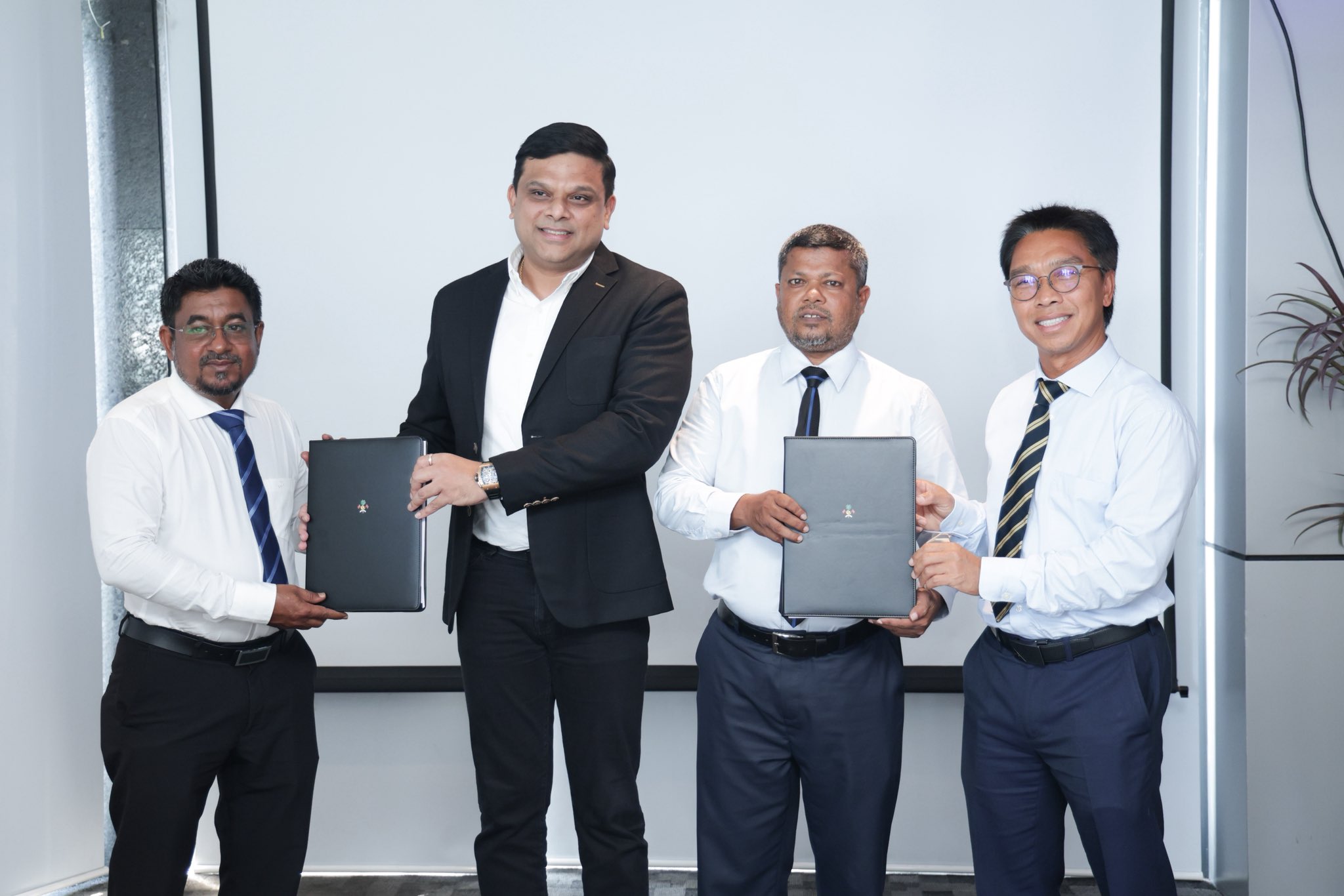
During the President's visit to the four southernmost atolls of the Maldives from the 18th to the 22nd of this month, millions of rufiyaa worth of projects were initiated. Memorandums of understanding for infrastructure development projects were signed with companies from three foreign countries.
Among these, an MoU was signed for the preliminary design and survey work of the Addu City Hithadhoo and Hulhumeedhoo bridge project, one of the most important projects in Addu City. The President also inaugurated the practical work of the second phase of modernising the roads of Fuvahmulah City during this trip. Furthermore, the government signed an MoU for the development of the Thinadhoo International Airport during this visit. An MoU for the development of an international airport in GA. Vilingili was also signed by the government during this trip. Whether funded by grants or loans, these projects cost millions of rufiyaa.
And that was not all. During this trip, the President also promised to carry out projects costing millions of rufiyaa. These include a promise to further develop Maavarulu Airport and connect it to Gadhdhoo by land, a promise to develop the island's harbour as an industrial harbour as requested by the people of Gemanafushi, and a promise to carry out a land reclamation project in Faresmaathodaa that includes a slipway.
While so many projects were discussed during the President's trip and promises were made to carry out numerous infrastructure development projects using state budget funds, fishermen in the south were waiting for a decompression chamber. No project or initiative related to this was included or announced during the President's trip. Fishermen in the south say a decompression chamber is very important.
"They started big projects after selling off islands, what would it cost to place a decompression chamber somewhere easily accessible to us? There is no decompression chamber in any southern island. If we get decompression sickness, we have to fight for our lives. There is a machine in Thinadhoo. It is not operated. We really want a decompression centre placed somewhere easily accessible to southern fishermen," a southern captain said.
If a fisherman from the southernmost region gets decompression sickness, they are taken to the nearest hospital for treatment until they can be brought to Male'. But that hospital can only provide oxygen. They can reach Male' if the hospital requests and arranges Aasandha. Or if the family requests and obtains Aasandha. This also takes time. Sometimes, even if Aasandha is obtained, there is no space on the Maldivian flight, delaying their arrival in Male' for treatment. Currently, since the Dornier and helicopter are not in service, if space is not available on Maldivian, fishermen are brought to Male' on a Coast Guard vessel. In some cases, doctors do not give permission to transport them to Male' by air. These are all reasons why a decompression chamber must be established in the south.
Decompression chamber services are provided at Kuredu Island Resort, Bandos, and Kandima Resort. The price is quite high. Currently, the only chamber operating on an inhabited island in the Maldives is at ADK. If NSPA is not arranged for ADK, fishermen pay a large sum out of pocket for this. A captain who recently sought treatment at ADK said they explain the price before putting you in the chamber, and they only let you in after ensuring the bill can be paid.
"I recently got decompression sickness while diving. The boys on the dhoni immediately pulled me up and called the Coast Guard. The Coast Guard took me to Thinadhoo. I was kept on oxygen in Thinadhoo. When my family asked to take me to Male', the doctor didn't give permission to board a flight because of my oxygen level. That was because it could harm me. The doctor said even if the family signs, I couldn't be released. That's because someone who departed like that previously died on the flight. After two days, I finally came to Male' with the help of the Coast Guard. Think about it, that's a 10-hour journey. The sea was so rough. We stopped in Laamu and then reached Male'. This is our condition. That's why we say we need a chamber in the south," a southern captain said.
According to doctors, the most desirable course of action is to quickly place the patient in a decompression chamber. If delayed too long, it affects the nerves, causing urinary and bowel difficulties. And the person loses balance when walking. Therefore, decompression treatment must be expedited.
"If placed in the chamber quickly, it won't lead to further complications. When decompression sickness occurs, air bubbles form in the nerves. By putting them in the chamber, we send them on a dry dive. So, from the moment decompression sickness occurs, one must hurry to seek treatment. If delayed, it could end badly," a doctor said.
It is estimated that there are about seventeen thousand fishermen in various regions of the Maldives. Fishermen usually get decompression sickness while diving to catch bait. There have been tragic incidents in the Maldives due to decompression sickness. Fishermen said it is highly necessary to establish arrangements in various regions of the Maldives where fishermen can travel quickly and easily receive decompression treatment.