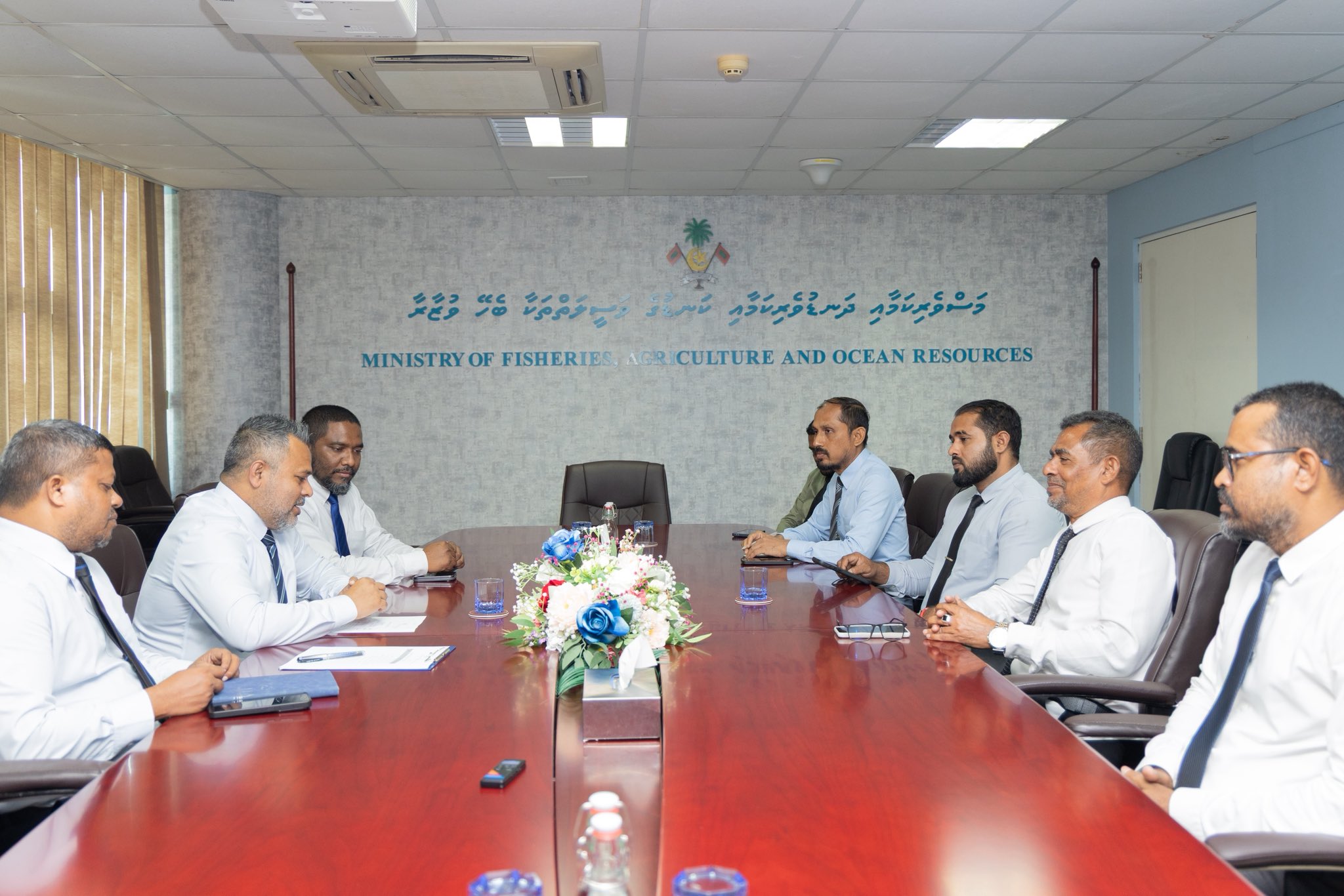
Fisheries Minister Ahmed Shiyam has announced that investment opportunities in the government-designated mariculture zones will be opened to foreign investors next month. The Minister made these remarks during a special interview given to the state media, PSM, regarding the Ministry's work.
In his interview, the Minister highlighted that developing mariculture as a distinct industry to increase marine wealth is a key initiative of President Dr. Mohamed Muizzu, and he provided updates on the government's efforts to develop mariculture as a separate industry. In this regard, the Minister stated that specific zones have been designated for mariculture, procedures for leasing these zones have been formulated, and the relevant regulations have been gazetted.
According to the Minister, the Maldives' mariculture industry is being shaped to facilitate opportunities for foreign investors, and efforts are underway to create an environment where foreign investors will come and invest in the Maldives' mariculture sector. To this end, the Minister noted that in order to provide better incentives than those offered by countries with advanced mariculture industries that the Maldives might compete with, investors will not be charged an acquisition fee and will be exempt from paying rent for the first three years.
"I believe this is the first time a government has designated specific areas for mariculture in the Maldives. And we have provided very good incentives to investors in these designated areas. Among them, we do not charge an acquisition cost. And along with that, there is no land rent either. The actual investment these parties have to make will be significantly reduced," Minister Shiyam said.
The Minister mentioned that some foreign parties engaged in mariculture who are interested in investing in the Maldives' mariculture zones have already submitted proposals to the Ministry. He added that preparations are currently underway to open investment opportunities in the mariculture zones to foreign investors, and that it will be opened for bidding next month.
"God willing, we are now preparing for the opening (for bidding). After preparing the bid documents, we intend to open it towards the end of next month, God willing, and dedicate three months to foreign investments. By dedicating three months, we will see if good foreign investments come to the Maldives' mariculture sector," Minister Shiyam said.
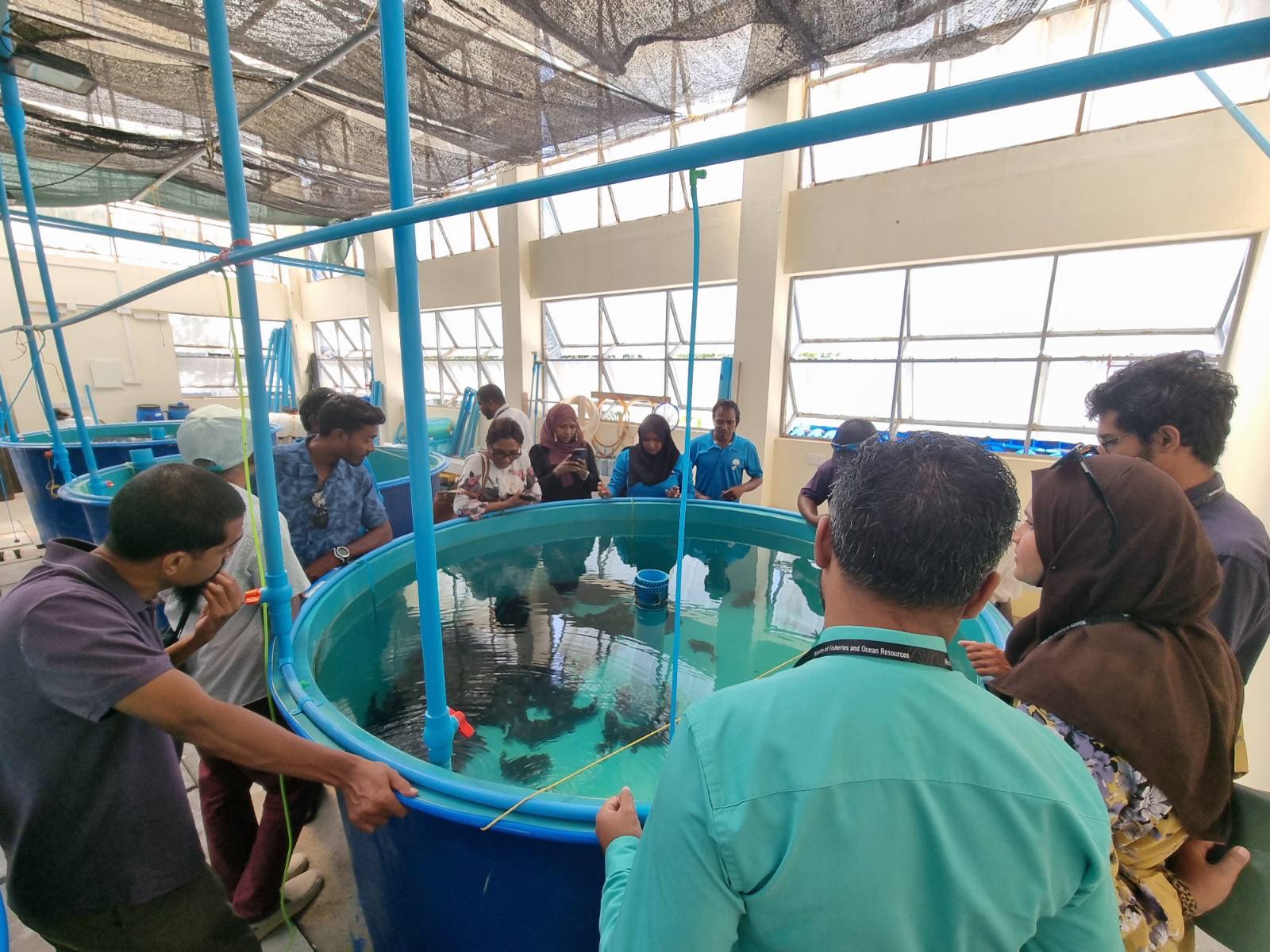
The Minister noted that mariculture is currently practiced on a very small scale in the Maldives, and that if mariculture is started as a distinct industry and conducted on a commercial scale, the Maldives will not need to import certain types of seafood.
"Mariculture in the Maldives is currently done on a very small scale. It is mostly done on a community scale. And mariculture in the Maldives is also in a very infant stage, very early stages. God willing, we are bringing mariculture to a commercial scale," Minister Shiyam said.
In order to establish mariculture businesses in the Maldives, build hatcheries, and grow hatchery-produced species in the marine environment, five areas have been designated as mariculture development zones, open to the public including foreign investments. These zones have been designated to include the islands and reefs within those areas.
Designated Mariculture Zones:
Bodu Thiladhunmathi Mariculture Zone (HDh. Maafaru, HDh. Hirinaidhoo, HDh. Milaafaru, HDh. Adaarafaru, Sh. Gonaafaru, HDh. Naivaadhoo, 2000 hectares of lagoon area)
Maalhosmadulu Uthuruburi Mariculture Zone (R. Maadoonifaru, R. Dhigufaru, R. Fasgandufaru, 1700 hectares of lagoon area)
Mulaku Atoll Mariculture Zone (M. Dhiththundi, M. Vanneru, 540 hectares of lagoon area)
Th. Atoll Mariculture Zone (Th. Fushi, Th. Kani, Th. Vabbadhi, 1000 hectares of lagoon area)
K. Atoll Mariculture Zone (South of Male' Atoll, starting from Vaadhoo channel and extending approximately 7 kilometers south, a total of 73 hectares of reef area)
Among the procedures to be followed in leasing the designated mariculture zones are: leasing to parties with experience in breeding marine life in hatcheries and opening it generally to include foreign investments; leasing the islands and reefs in these zones in accordance with Articles 46 and 50 of the Maldives Fisheries Act to introduce technology not available in the Maldives under the policy of establishing a mariculture industry; and leasing the islands and reefs in these zones to foreign investments for a period of 50 years in accordance with the "Foreign Direct Investment Policy" formulated under the Foreign Investment Act. In addition, it has been decided to allow proposals to be submitted for mariculture activities in the entire zone or a part of the zone; if proposing to use a part of the zone, rent will be charged in proportion to the size of the proposed area; no acquisition fee will be charged from parties leasing the zones; and rent for the first 3 years will be waived. These decisions have been made to facilitate the development of a mariculture industry in the Maldives.