Minister of Fisheries, Agriculture and Marine Resources Ahmed Shiyam has stated that although the government previously provided a subsidy to the state-owned fisheries company, MIFCO, to purchase fish, the subsidy payments have now been stopped.
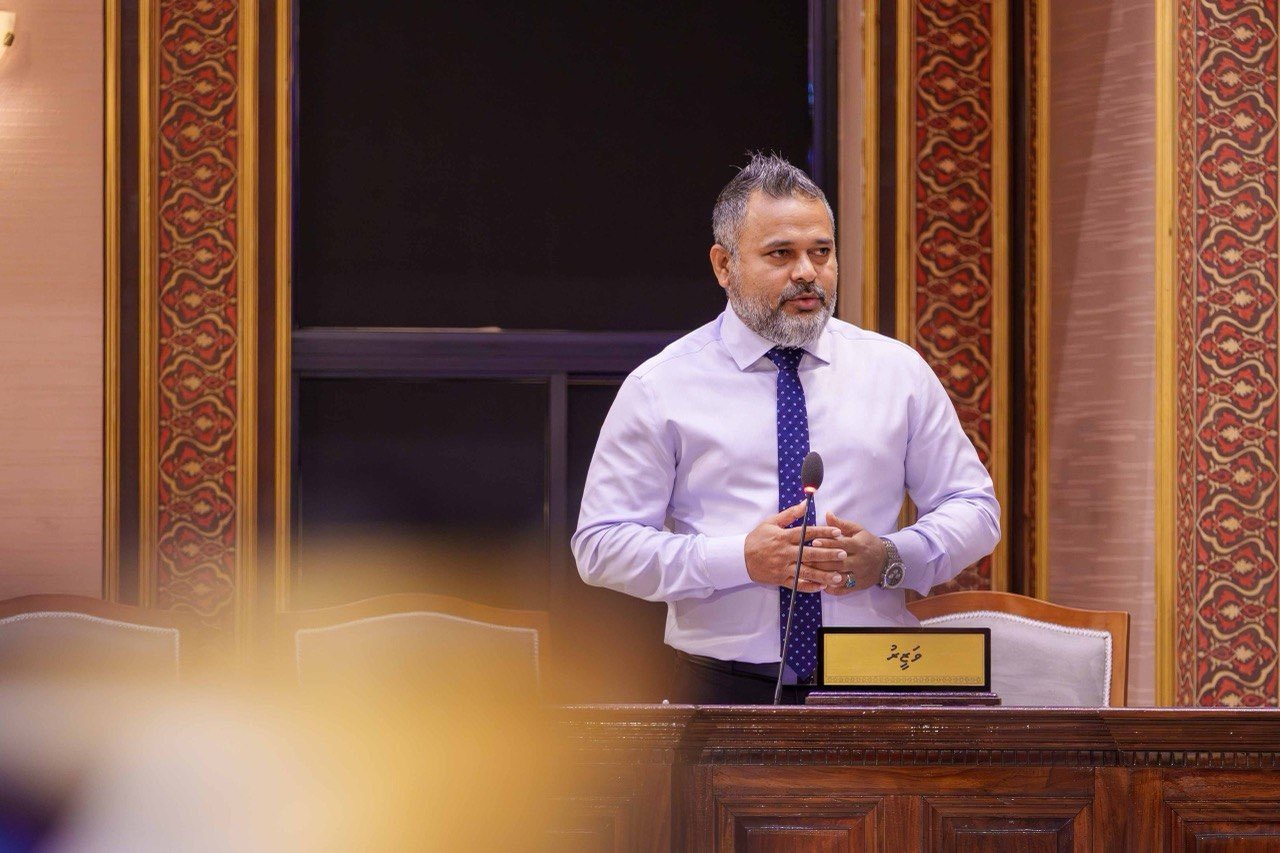
Responding to a question by Funadhoo constituency member Mohamed Mamdhooh during today's parliamentary sitting, the Minister said that the government no longer provides any subsidy to MIFCO for purchasing fish, and that the government's aim is to make MIFCO a self-sustaining company. The Minister also noted that this is the path President Dr. Mohamed Muizzu has been working towards since his very first day in office.
"I dare say today, you know, we do not give even a single rufiyaa to MIFCO now from the government telling them to buy fish," the Minister said, confirming the matter.
Comparing the current situation with the previous administration, the Minister said that when the government of President Ibrahim Mohamed Solih set the fish purchase price at 25 rufiyaa, the government had to pay 13 rufiyaa per kilo to MIFCO as a subsidy. Noting that the Maldives catches approximately between 100,000 and 123,000 tonnes of skipjack tuna annually, the Minister highlighted that this amounts to a subsidy in the billions.
The Minister questioned why, instead of giving subsidies for political votes, that money was not spent on establishing infrastructure and building factories. He added that even after 40 years, there is only one factory in Felivaru, and the processing capacity of the entire Maldives, including private companies, is at approximately 105 tonnes. However, the Minister noted that work is underway to triple the processing capacity.
"God willing, we are changing the current 50 tonnes in F. Nilandhoo, GDh. Fiyoaree, and Felivaru to about 100 tonnes. God willing, when these works are completed, the Maldives' capacity will be tripled," the Minister said.
The Minister highlighted that with this change, revenue from fish can be increased by exporting value-added fish. He also stated that these policies will increase the price received for exported fish, thereby increasing the income of fishermen.