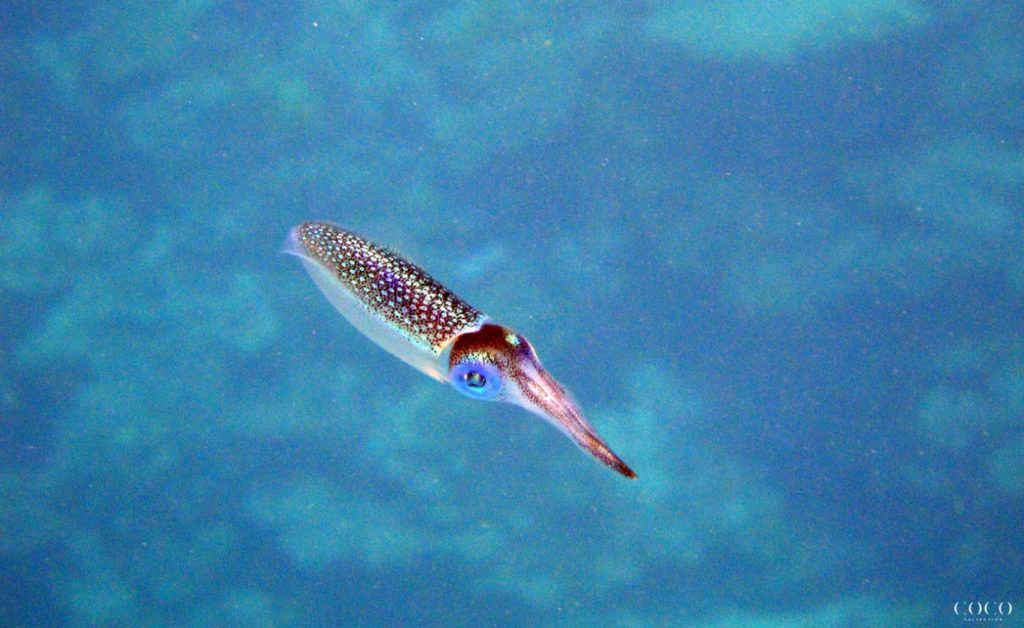
The "Maldives Diamondback Squid Fishery Management Plan" is the main guiding principle for managing the diamondback squid fishery in the Maldives. The species managed under this plan is the Thysanoteuthis rhombus, belonging to the Thysanoteuthidae family, as stated by the then Ministry of Fisheries and Agriculture.
This management plan is formulated under Article 18 of the Maldives Fisheries Act, and is the plan for organizing, operating, and managing the fishery as specified in Article 17(a)(9) of the Act. This plan was gazetted and came into effect on 3 December 2020.
Main Objectives of the Plan:
To establish an arrangement for organizing and operating the diamondback squid fishery, manage the diamondback squid fishery responsibly, and ensure the benefits of this fishery are provided to the Maldivian people for the long term;
To guide state institutions and all stakeholders involved in the sustainable development of the diamondback squid fishery and trade.
Under the "Maldives Diamondback Squid Fishery Management Plan", all activities that may affect the diamondback squid population are considered. As such, the plan includes procedures for catching, processing, storing, buying, selling, and exporting diamondback squid. Furthermore, the plan applies to any activity or parties conducting such activities, vessels, processing facilities, and export facilities that fall within the scope of the plan.
According to the diamondback squid fishery management plan, licenses for diamondback squid fishing will be issued to a maximum of 30 vessels. Licenses are issued to a specific number to manage natural resources sustainably in the absence of complete information obtained through scientific research. In addition, taking precautionary measures in advance to manage the diamondback squid fishery, considering the potential damage caused by leaving it unmanaged, is also highlighted as an important aspect.