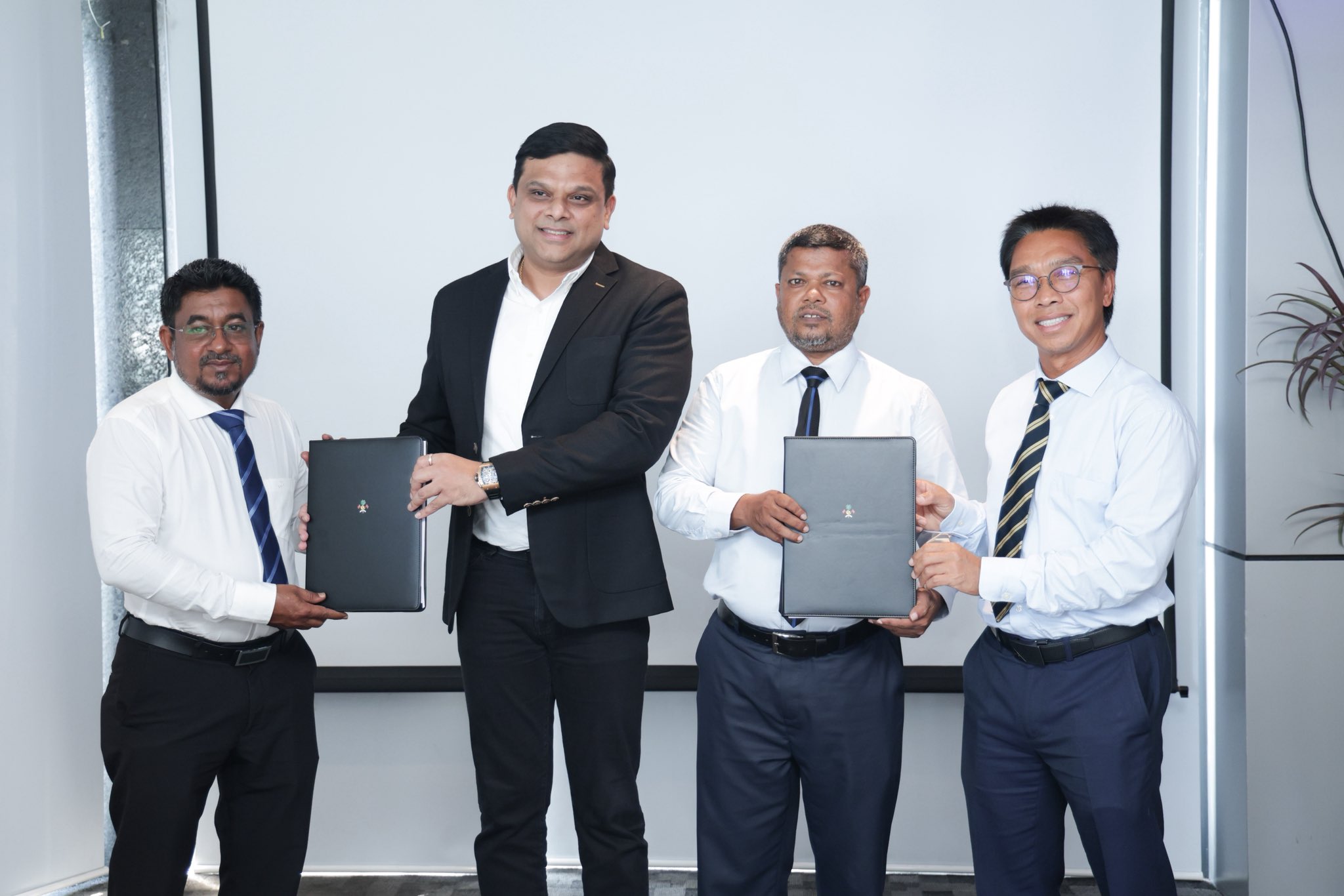
Certificates have been awarded to the participants who completed the second Basic Mariculture Course conducted under the Marine Hatchery Skills Development Programme.
At a ceremony held yesterday at the Maniyafushi Research and Training Facility, certificates were handed over to the participants by Fisheries Minister Ahmed Shiyam.
A total of 16 participants from across the Maldives took part in this 14-day course, with 14 successfully completing it. The first batch of this course, conducted by the Maldives Marine Research Institute with the assistance of the World Bank-funded Transform Project run by the Ministry, was held from February 8 to 21. While 15 people from various regions of the Maldives participated in that training programme, 12 completed the course. With this, the total number of individuals trained under this programme has reached 26.
The course was conducted with the objective of producing Maldivian technicians needed to introduce and develop a mariculture industry in the Maldives. It provided information on aquaculture systems, live feed production, breeding of grouper, sea cucumber, Maldivian giant clam, and pearl oyster, identifying and preventing diseases in cultured species, and conducting mariculture activities with minimal environmental impact. Additionally, participants were given practical experience in breeding grouper, sea cucumber, and giant clam.
The Marine Hatchery Skills Development Programme is an initiative conducted jointly by the Ministry of Fisheries and Ocean Resources and the Maldives Marine Research Institute. Included in President Dr. Mohamed Muizzu's "Hafthaa 14" roadmap, the programme aims to develop mariculture to provide additional income and employment opportunities close to the islands for people living across the Maldives, thereby further expanding and diversifying the country's economic activities.
The Fisheries Ministry is undertaking numerous efforts to establish and develop a mariculture industry in the Maldives. These include a programme to sell sea cages and live juvenile groupers to interested parties. The arrangement to provide sea cages and live juvenile groupers to private individuals is intended to pave the way for mariculture businesses by growing groupers.
Furthermore, as part of the efforts to establish mariculture as a distinct industry, in addition to designating 4 zones for mariculture development, a lagoon located approximately 2 kilometres from Maniyafushi has now been designated for mariculture. Moreover, to accelerate the growth of the mariculture industry, the government has decided to offer numerous concessions to foreign investors operating in the mariculture zones.